Evolved Clarity
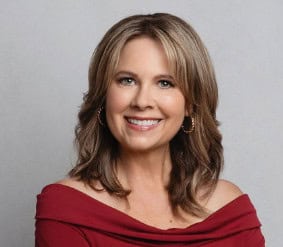
What is your approach to helping clients identify and solve key challenges? **What is your approach to helping clients identify and solve key challenges?**
My approach begins with listening for what is actually happening beneath the obvious problem. Many challenges show up as overwhelm, stalled decisions, resistance to change, unclear priorities, or lack of confidence, but the deeper issue is often unnamed value, misaligned routines, poor communication, or a missing bridge between what people know and what they need to do next. I help clients slow down enough to name the real challenge, separate noise from what matters, and identify the smallest useful next step. From there, we create practical structure, clearer language, and a way forward that fits real life, not an idealized version of it.
How do you tailor your coaching or consulting style to different industries? I pay attention to the human patterns inside the industry first. Every industry has its own language, pace, pressures, and expectations, but people still need clarity, communication, trust, useful systems, and the ability to adapt without losing judgment. My background in business ownership, construction-related industries, small business, coaching, and technology adoption helps me translate across different environments. I do not come in with a one-size-fits-all formula. I look at the people, the workflow, the decision points, the resistance, and the real-world constraints before recommending a path forward.
What are the most common misconceptions about consulting? One common misconception is that consulting is simply giving advice. Good consulting is not walking in with a stack of answers before understanding the room. Another misconception is that the problem is usually technical when, very often, the technical issue is only part of it. Change almost always has a human side: fear, confusion, habits, communication gaps, unclear ownership, or lack of trust. The best consulting helps people understand the real problem, make better decisions, and take action in a way that can actually be carried out.
How do you measure the success of your client engagements? I measure success by whether the client leaves with more clarity, better language, stronger decisions, and practical movement. In business consulting, that may look like clearer processes, better team communication, smarter use of AI or technology, reduced confusion, or a more grounded plan. In coaching, it may look like restored self-trust, better routines, more honest priorities, and the ability to act without constant second-guessing. I care about outcomes, but I also care about whether the solution can be lived with and sustained after the engagement ends.
What trends are influencing the future of consulting and coaching? AI is one of the largest forces shaping both consulting and coaching, but not only because of the tools themselves. The deeper trend is that people and businesses are being asked to adapt faster than they can always emotionally or operationally process. There is more information than ever, but not necessarily more clarity. I believe the future of consulting and coaching will require a blend of technology literacy, human judgment, emotional intelligence, ethical decision-making, and practical implementation. People will need help learning what to automate, what to question, and what should remain deeply human.
What’s the most rewarding part of your work? The most rewarding part of my work is watching someone recognize the value they were minimizing. Whether I am working with a woman navigating a personal transition or a business leader trying to make sense of change, there is a powerful moment when the fog lifts and they can finally say, “This is what is really happening, and this is what I need to do next.” I love helping people retrieve their own wisdom, name it clearly, and move forward with more confidence and self-trust.
What skills do you think are essential for future consultants or coaches? Future consultants and coaches will need more than expertise. They will need discernment, emotional intelligence, curiosity, clear communication, ethical judgment, and the ability to translate complexity into something people can actually use. They will also need enough AI and technology literacy to understand what is changing, without becoming overly dependent on tools. The most valuable consultants and coaches will be the ones who can combine practical strategy with deep human understanding. They will know how to ask better questions, read the room, identify what matters, and help people take grounded action.
Disclaimer: The information contained in this Business Profile, including any external links, is provided on an “as is” basis with no guarantees of completeness, accuracy, usefulness or timeliness. Daily News Network does not verify business information provided and assumes no responsibility or liability for its accuracy. Daily News Network does not endorse any business listed in this directory.
Latest Brief

PR Champions
Latest Updates
Living My Faith with Paul Donaldson
Legacy of Leaders with Sandra Lief of FairchildHR
